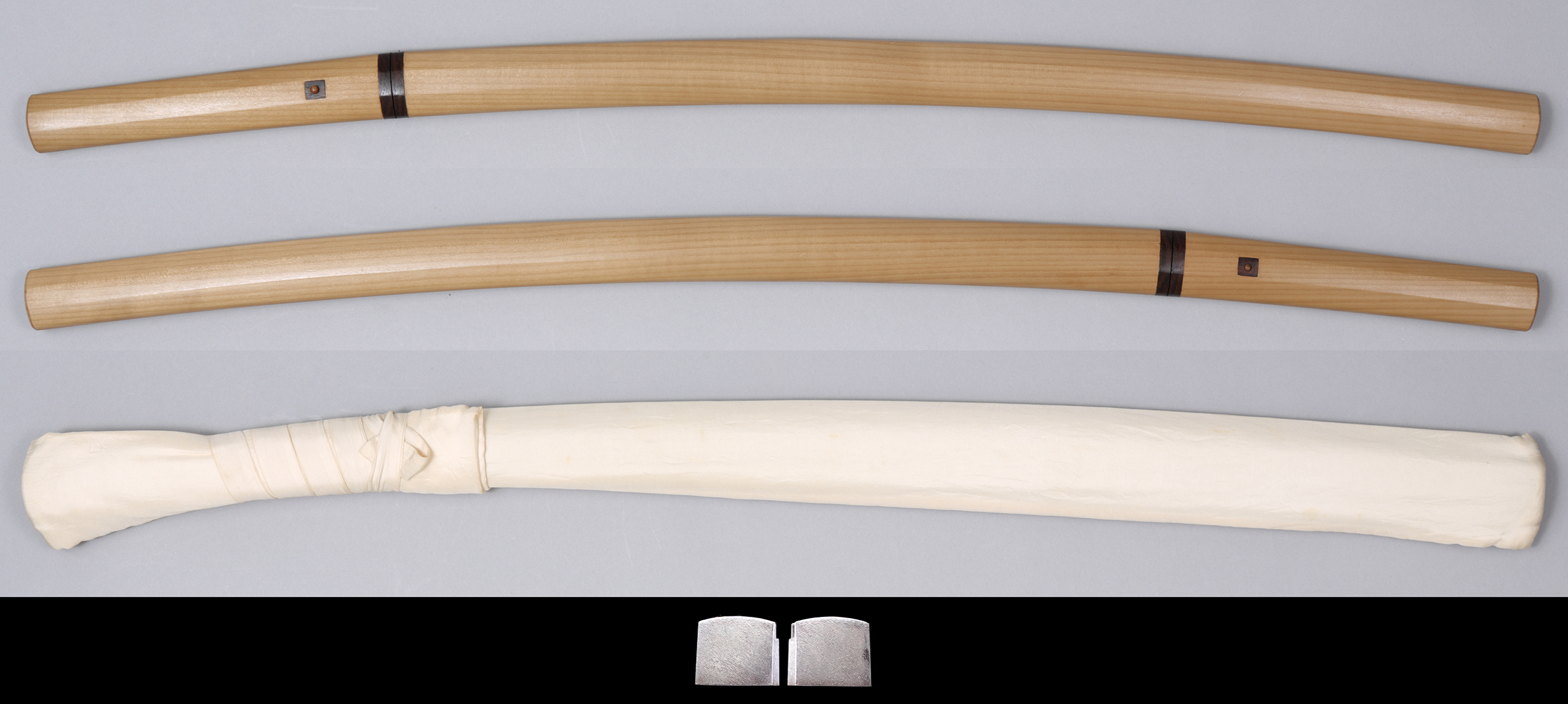
[ Feature ]
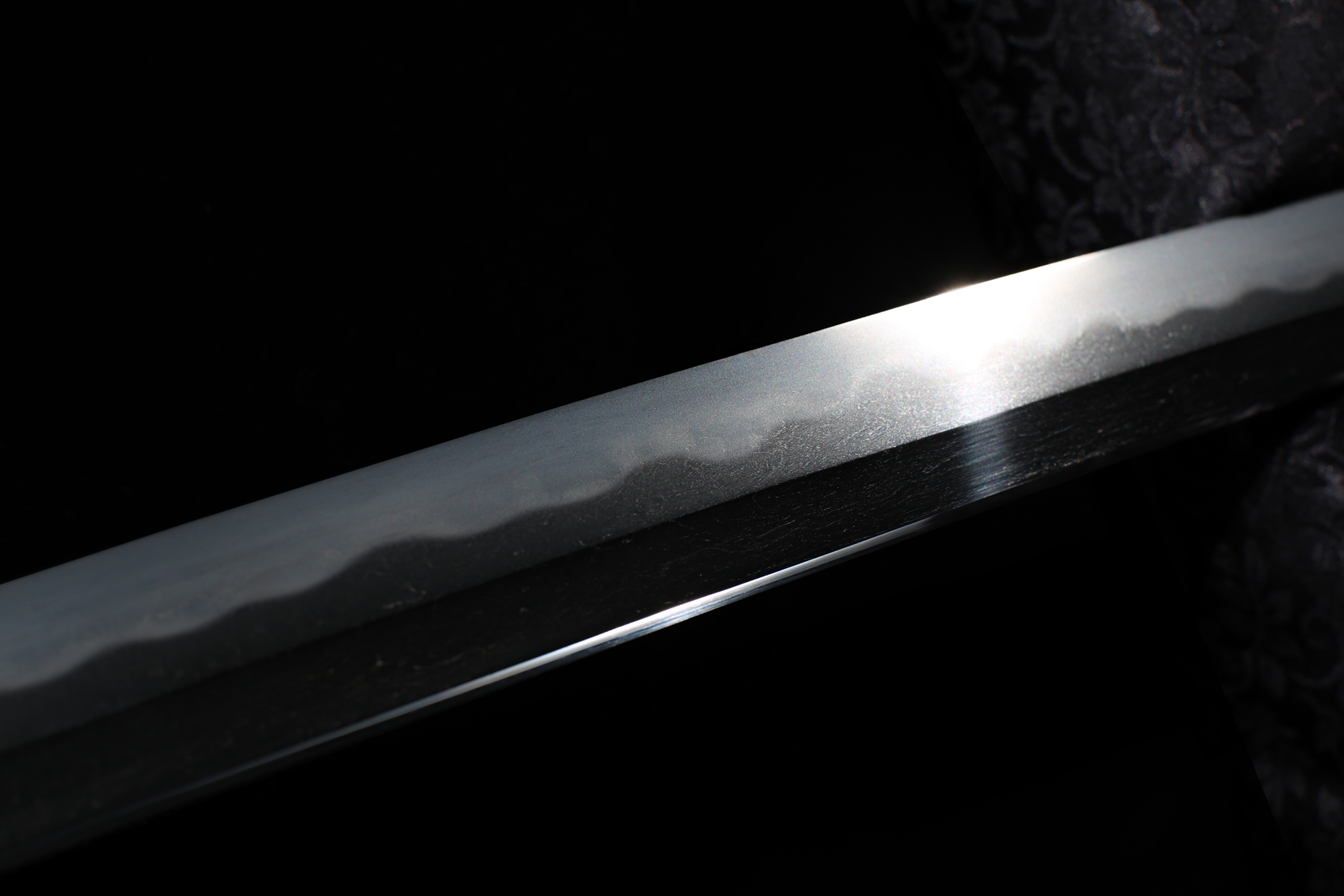
Form : The blade features a shinogi-zukuri hamon with a straight, short temper line, exhibiting a slight difference in width and thickness between the base and tip, with a moderate curvature resulting in a medium cutting edge.
Nakago : The nakago is original, with a large, irregular file pattern, a yamagata-shaped tip, and one mekugi hole.
Jigane : The jigane exhibits an itame-hada pattern, a texture with a tendency towards hada-tachigokoro, and displays ji-nie.
Hamon : The hamon is straight with short, well-defined yakidashi, mixed with chouji and featuring a random pattern of ko-gunome, ko-ashi small feet, and well-developed nioi.
Boushi : The boshi is straight with a small, rounded tip, returning somewhat deeply.
[ Highlight ] The first-generation Settsu-no-kami Tadayuki, known as Taro-emon, was either the younger brother or disciple of Awata-guchi Omi-no-kami Tadatsuna. He resided in Tokiwa-cho, Osaka around the Enpō era and created swords there. Subsequently, the second-generation Shin'emon around the Genroku era and the third-generation around the Shōtoku era also created swords in Edo. The name was passed down to the fourth-generation Sadayemon and Tadatsugu (first signature) around the Genbun era. During the Edo period, alongside Edo, Osaka became a major centre for sword production, producing many master craftsmen. Among them were numerous swordsmiths who had relocated from other provinces, particularly from Kyoto. The Naniwa Tsuru, published in the seventh year of Enpō (1679), is a geographical record compiling information on late 17th-century Osaka. It lists 42 “swordsmiths specialising in wakizashi for provincial governors”, including Inoue Shinkai and Tsuda Sukehiro. Within this list, the entry for Settsu-no-kami Tadayuki appears to indicate Fushimi Ryōgaemachi, confirming Tadayuki as one such swordsmith who relocated from Kyoto to Osaka. This piece features a well-grained itame-hada grain pattern. The hamon is broad with a wide temper line, displaying a varied, small-patterned, wavy blade pattern with excellent nie. The construction is slightly high-ridged, with the ridge area also showing the forged surface. There are areas of ridge tempering.
[ Conditions ] There are slight flaws, but otherwise it is excellent.