   |
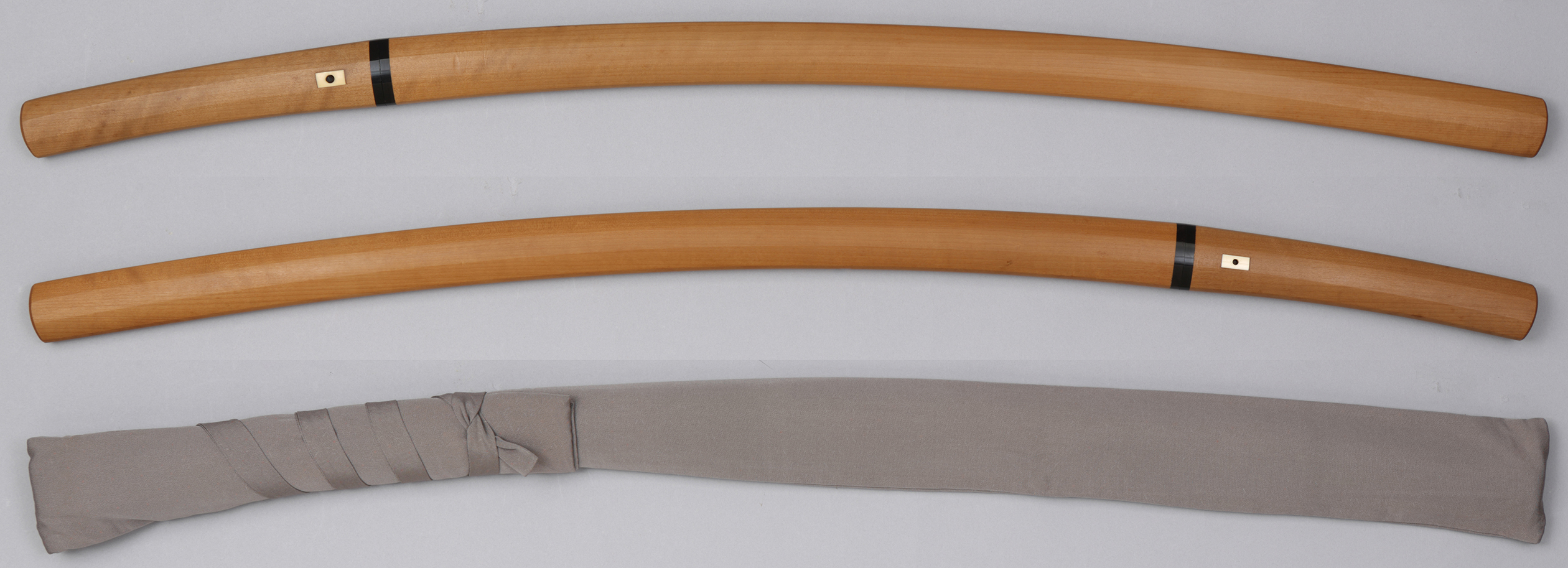
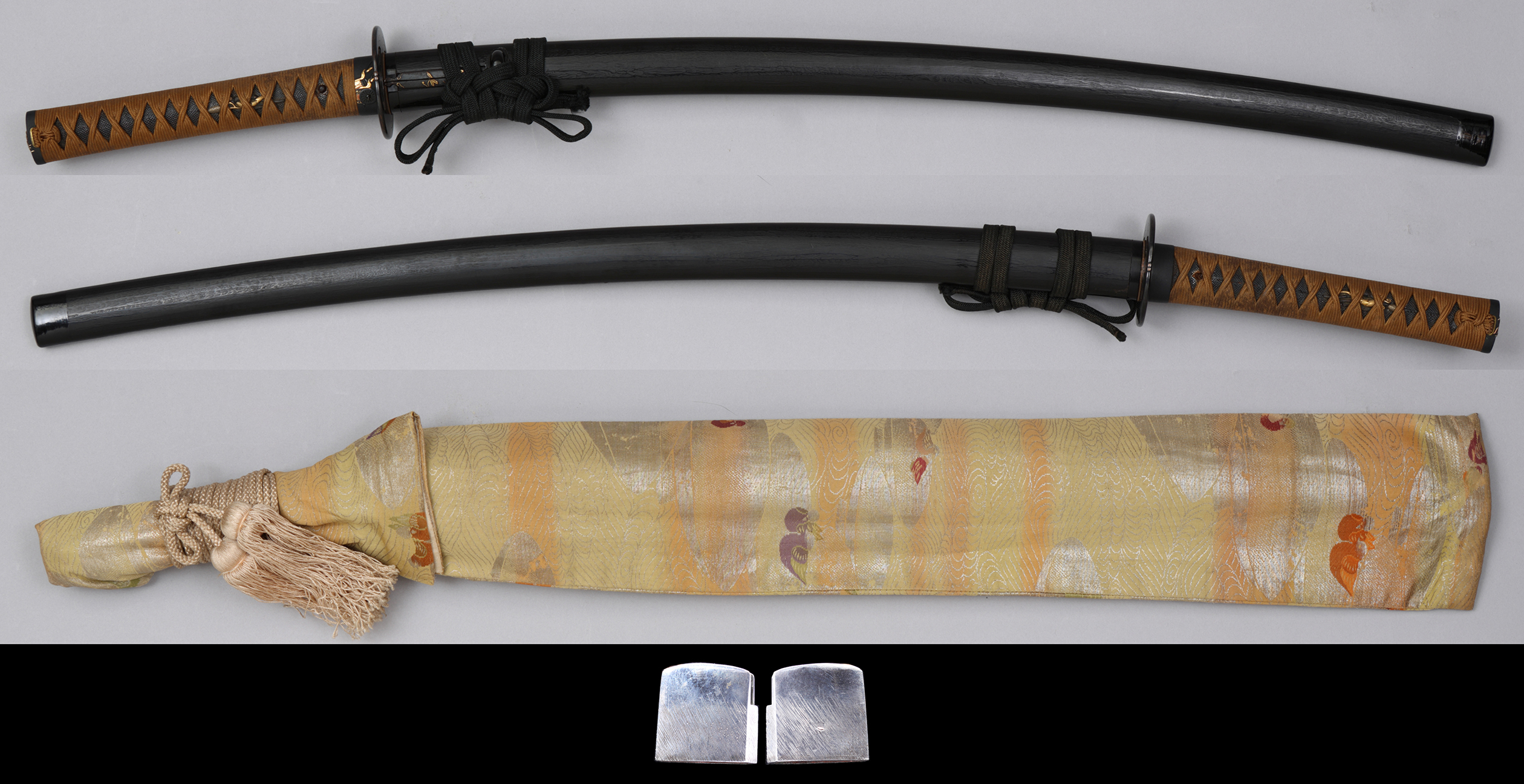
Katana, Shirasaya, Koshirae |
Mumei, attributed to Tsukushi Ryokai
|
[ Signature ] omote : no signature ura : - |
[ Size ]Blade length: 68.4 cm (2 shaku 2sun 1 bu 0 rin), curvature: 0.3 cm (1 sun), base width: 3.13 cm, base thickness: 0.68 cm, tip width: 1.90 cm, tip thickness: 0.52 cm, 2 mekugi holes, Blade weight: 602 g, total length of shira-saya: 95.5 cm, total length of outfit: 97 cm |
[ Period ] Muromachi |
[ Province ] Chikuzen |
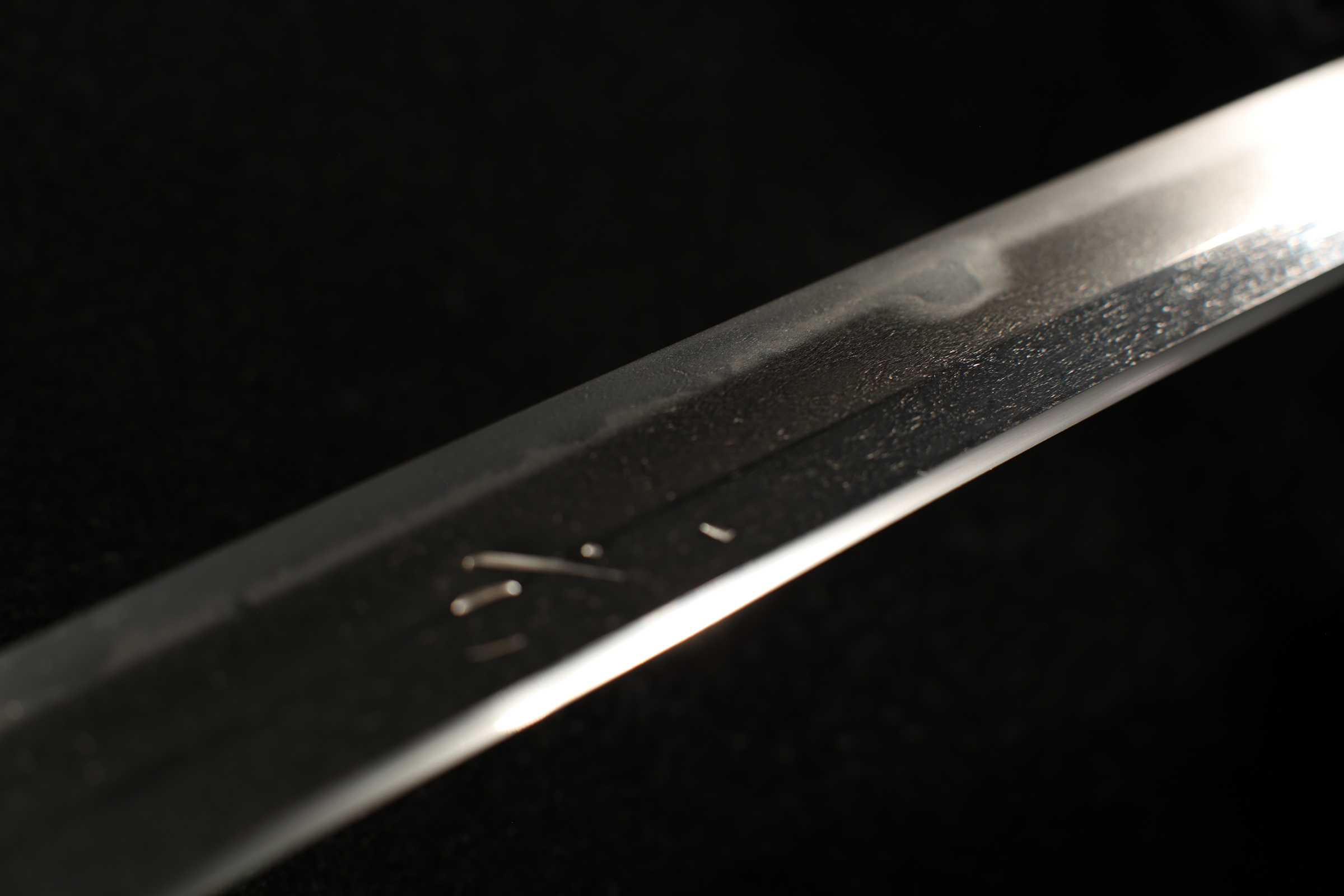 |
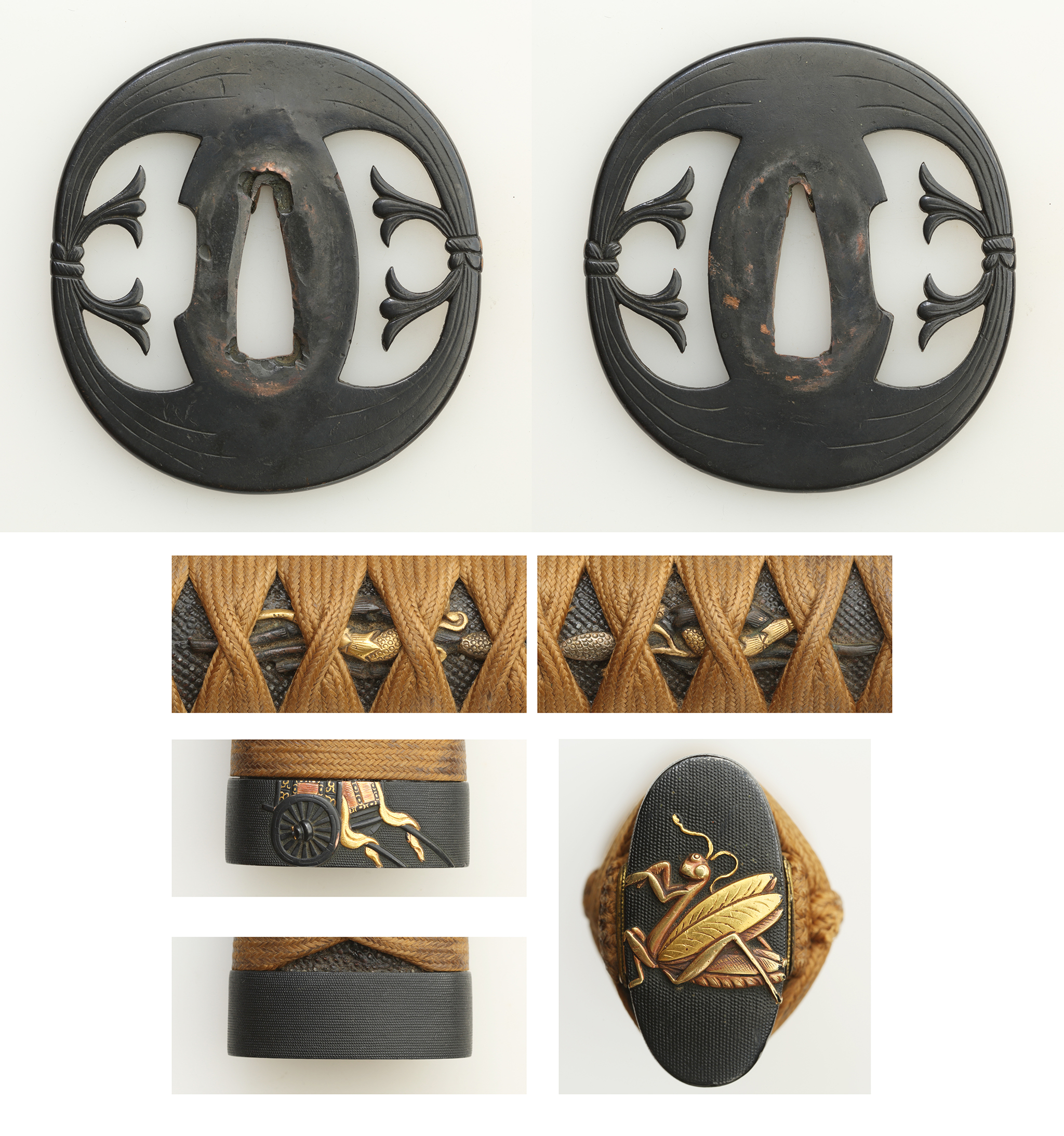
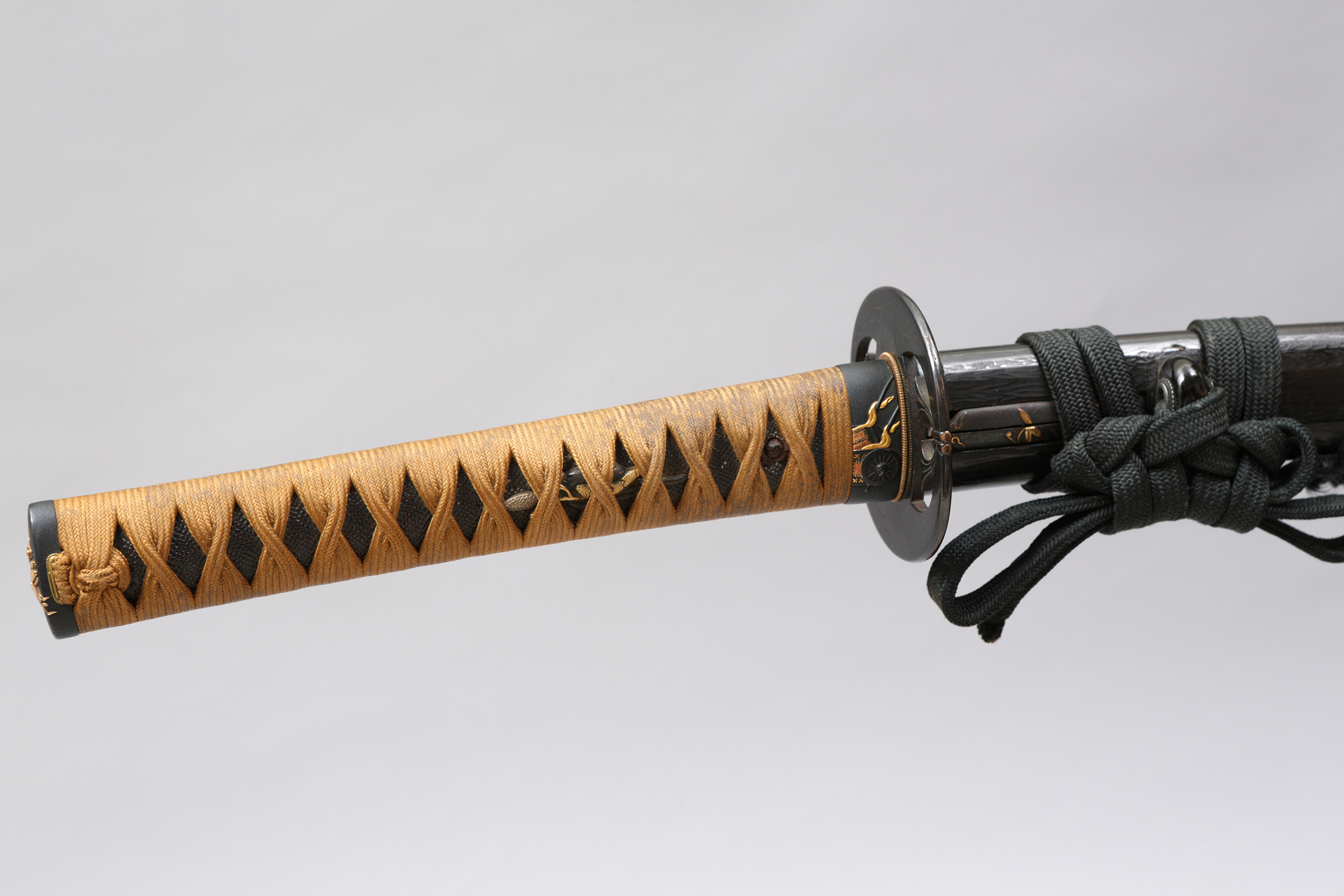
[ Feature ] Uchigatana Sheath with Varied Lacquer Work: Noshi-me pattern, openwork sword guard (polished red copper ground); tsukushi motif menuki (red copper relief carving with gold coloured painting); mantis-axe motif fuchigashira (red copper fish-scale ground, high relief carving with gold coloured painting); river-bone motif warikougai (iron ground, inlay with coloured paint) [ Highlight ] Following the relocation of Yoshisada—a disciple of Ryōkai Hisanobu of Yamashiro Province—to the Chikuzen region around the beginning of the Muromachi period, the school flourished and spread throughout Chikuzen and Buzen. The school produced many swordsmiths, including Kazusada, Kazumasa, Kazuyoshi, Shigeyuki, Munekazu, Hisanobu and Kazumasa; collectively, they are known as the Tsukushi Ryōkai school. This piece features a width difference between the base and the tip, a deep curvature, with the curvature extending towards the tip and a long, extended medium cutting edge. The jigane, with a distinct white hue, exhibits a combination of itame-hada and nagame grain patterns, with thick ji-nie. The hamon is a gu-no-me pattern with small ko-nie, forming a wavy blade pattern. [ Conditions ] The blade has been subjected to old polishing; whilst there is some minor rust on the ridge and in the groove, it is suitable for preservation and appreciation in its current condition. The surface grain on the front side intertwines with the ridge in places, resulting in a slightly rough texture, and there is some wear from polishing in these areas. The sheath is in excellent condition. |
[ Attachments ] Habaki(suaka-ji, silver foield, single), shirasaya, bag of shirasaya, koshirae, bag of koshirae and NBTHK tokobetsu kicho paper 特別貴重刀剣認定書(issued on 7th Oct. Showa 53(1978)) |
   |
[ Item number ] A010826 [ Price ] JPY 850,000- (shipping and insurance fee are not included in the price) |
Please order by E-mail.

About TOUKEN KOMACHI
BACK
TEL +81-(0)3-5284-9014/ FAX +81-(0)3-5284-9043____E-mail : s_tsukada@toukenkomachi.com
Copyright © 2009- Touken komachi All rights reserved. |