  |
Katana, Shirasaya |
Yokoyama Sukenaga
|
[ Signature ] omote : 横山加賀介藤原朝臣祐永 嘉永三年二月日 ura : ( chrysanthemum crest "one") 備陽長船住 |
[ Size ]Blade length: 70.9cm (2 shaku 3 sun 3 bu 9 rin), Curvature: 1.8cm (5 bu 9 rin), Base width: 3.05cm, Base thickness: 0.74cm, Tip width: 2.07cm, Tip thickness: 0.53cm, One mekugi hole, Blade weight: 742.5g, shira-saya total length: 104cm |
[ Period ] Edo, end of. Kaei 3 (1850) |
[ Province ] Bizen |
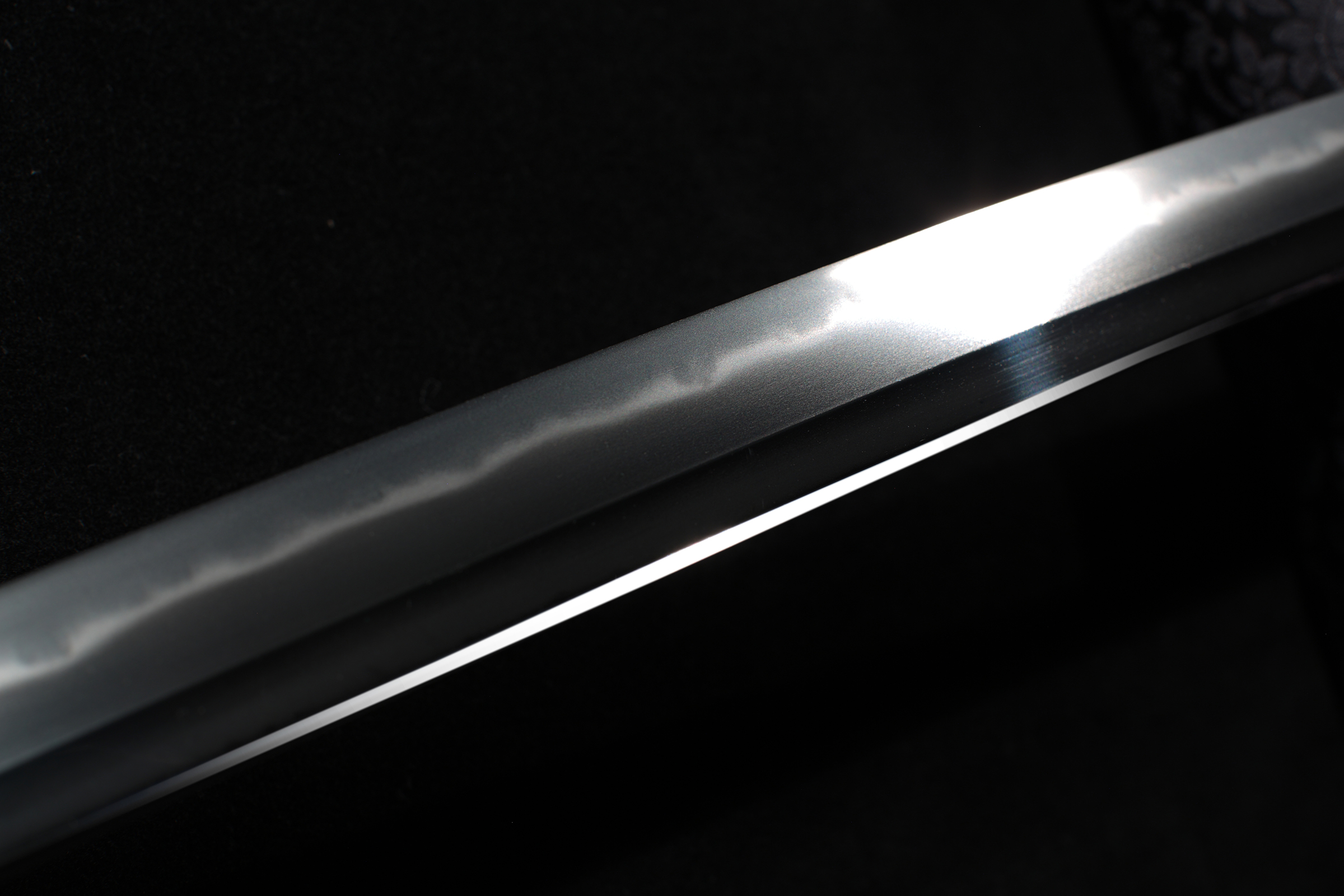 |
[ Feature ] [ Highlight ] The blade exhibits a pleasing form with a well-balanced curvature and a good width difference between the base and tip. The jigane is a fine, clean ground with a good mokume-grain pattern. The hamon, a beautiful nioi pattern with chōji elements, features the unique chōji-style blade pattern that this smith specialised in – a complex combination of irregular heads resembling tea flowers. Yūei's engraving is rare, making this a valuable piece of fine work that harmonises well with the overall atmosphere. Yokoyama Sukenaga had a first and second generation, both receiving the title of Kaga-no-suke. The first generation was the second son of Sukesada (Yūhei), inheriting the Yūhei lineage after his elder brother Sukemori became an adopted son of the Shichibei family. Works exist with signatures that indicate the first generation was the 56th descendant of Tomonari and the second generation was the 57th descendant of Tomonari. The first generation's dated works include: Tenmei 6 (1786), Bunka 10 & 12 (1813 & 1815), Bunsei 3, 7, 8, 9, 10, 11, 12, 13, 14, 15 (1820-1833), Kōka 2, 3, 4 (1845-1847), and Kaei 2, 3 (1849-1850). The second generation's dated works include: Kaei 3, 5, 6 (1850, 1852, 1853), Ansei 2 (1855), Man'en 1 (1860), and Genji 1 & 2 (1864-1865). [ Conditions ] Excellent. |
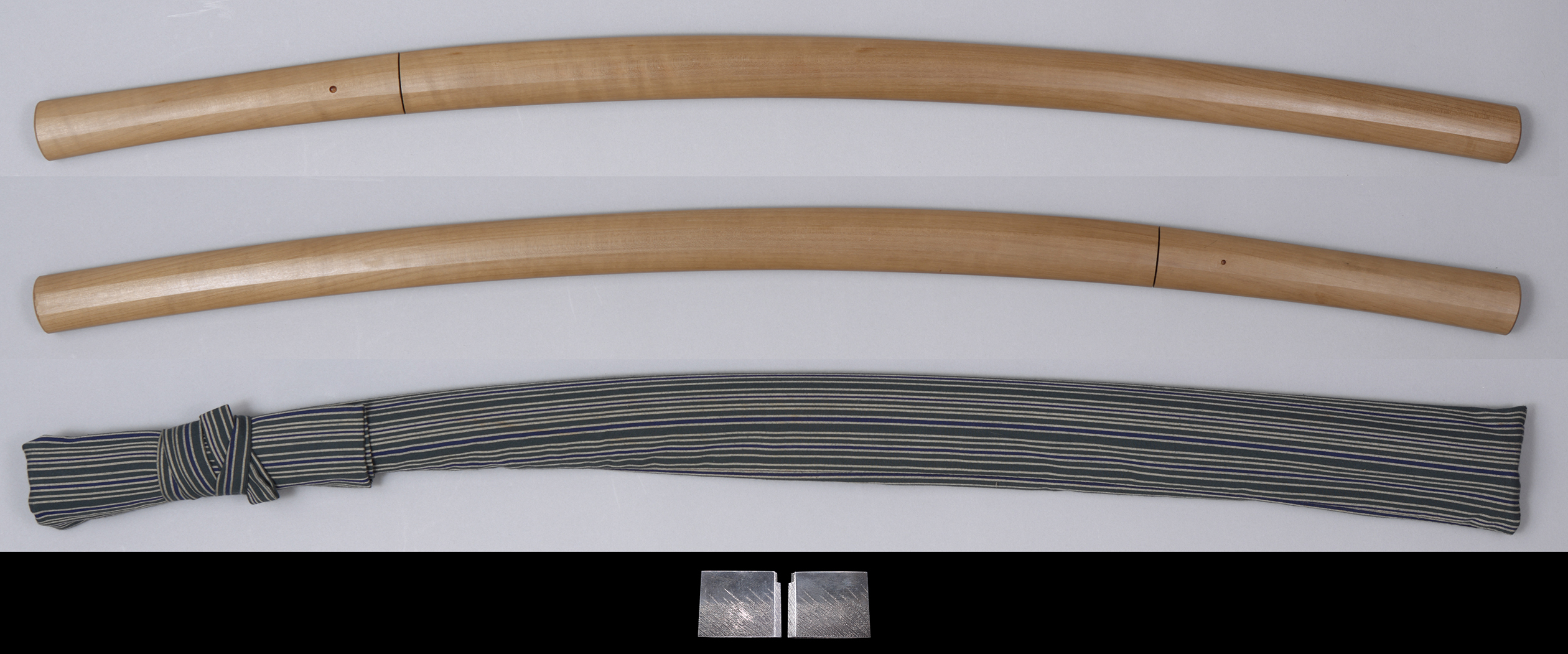
[ Attachments ] Habaki(silver, single), shirasaya, bag of shirasaya and NBTHK tokubetsu kicho paper (issued on 4th Sep. Showa 46(1971)) |
 |
[ Item number ] A020126 [ Price ] JPY 1,100,000- (shipping and insurance fee are not included in the price) |
Please order by E-mail.

About TOUKEN KOMACHI
BACK
TEL +81-(0)3-5284-9014/ FAX +81-(0)3-5284-9043____E-mail : s_tsukada@toukenkomachi.com
Copyright © 2009- Touken komachi All rights reserved. |