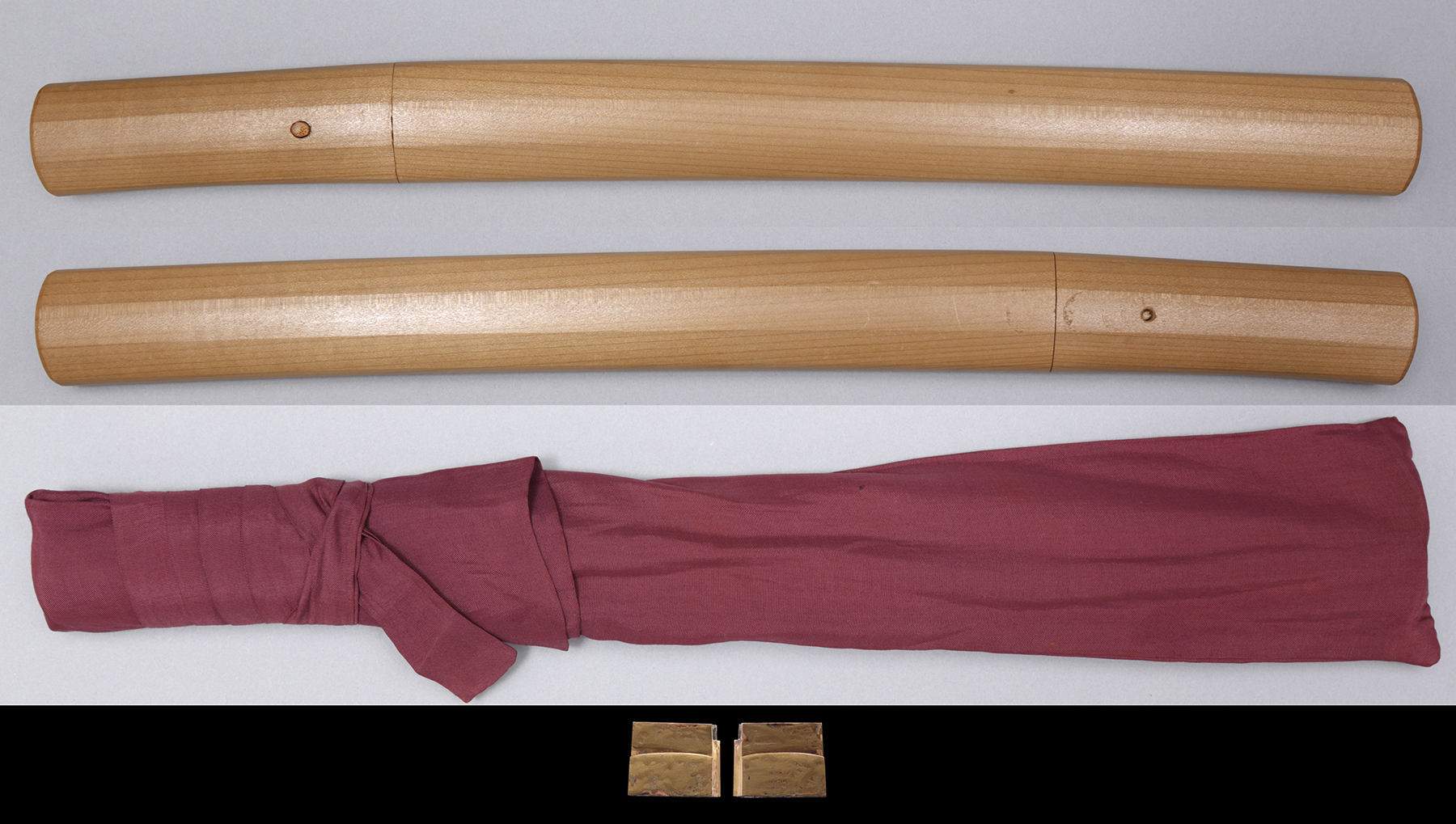
[ Feature ]
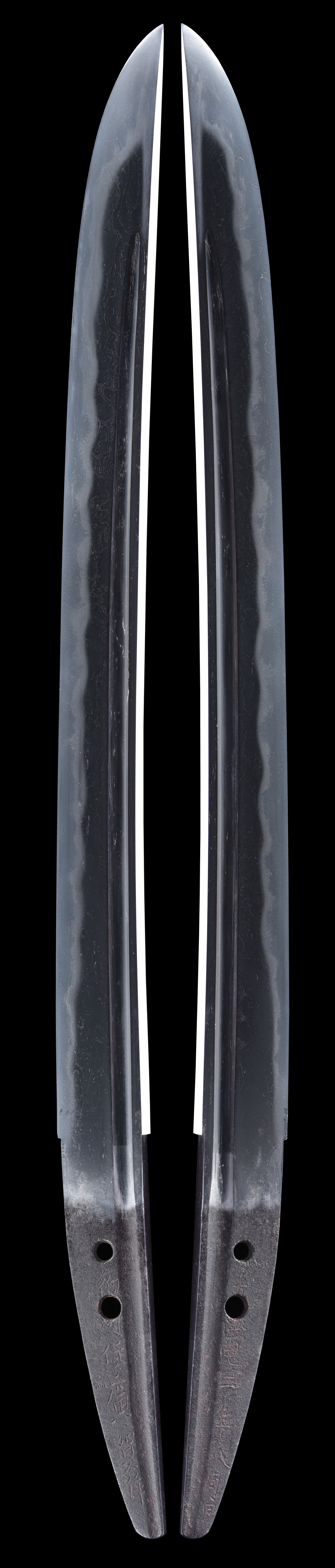
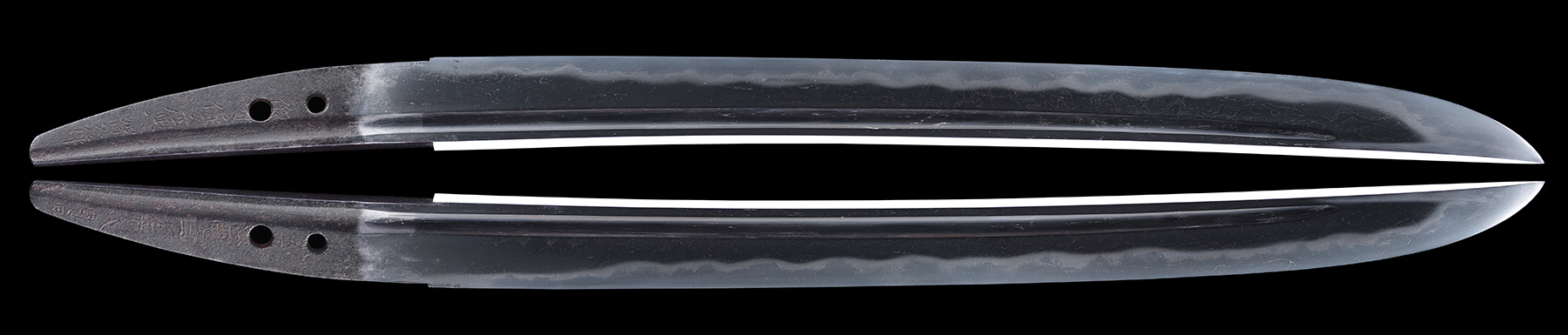
Form : A flat-forged blade with an iori-mune ridge, of ordinary width, with a slightly thickened kasane and a shallow curvature.
Engraving : The engraving features rod-shaped grooves running through both the front and back surfaces.
Nakago : It has a natural tang, diagonal file marks, a chestnut-shaped tip and two mekugi holes.
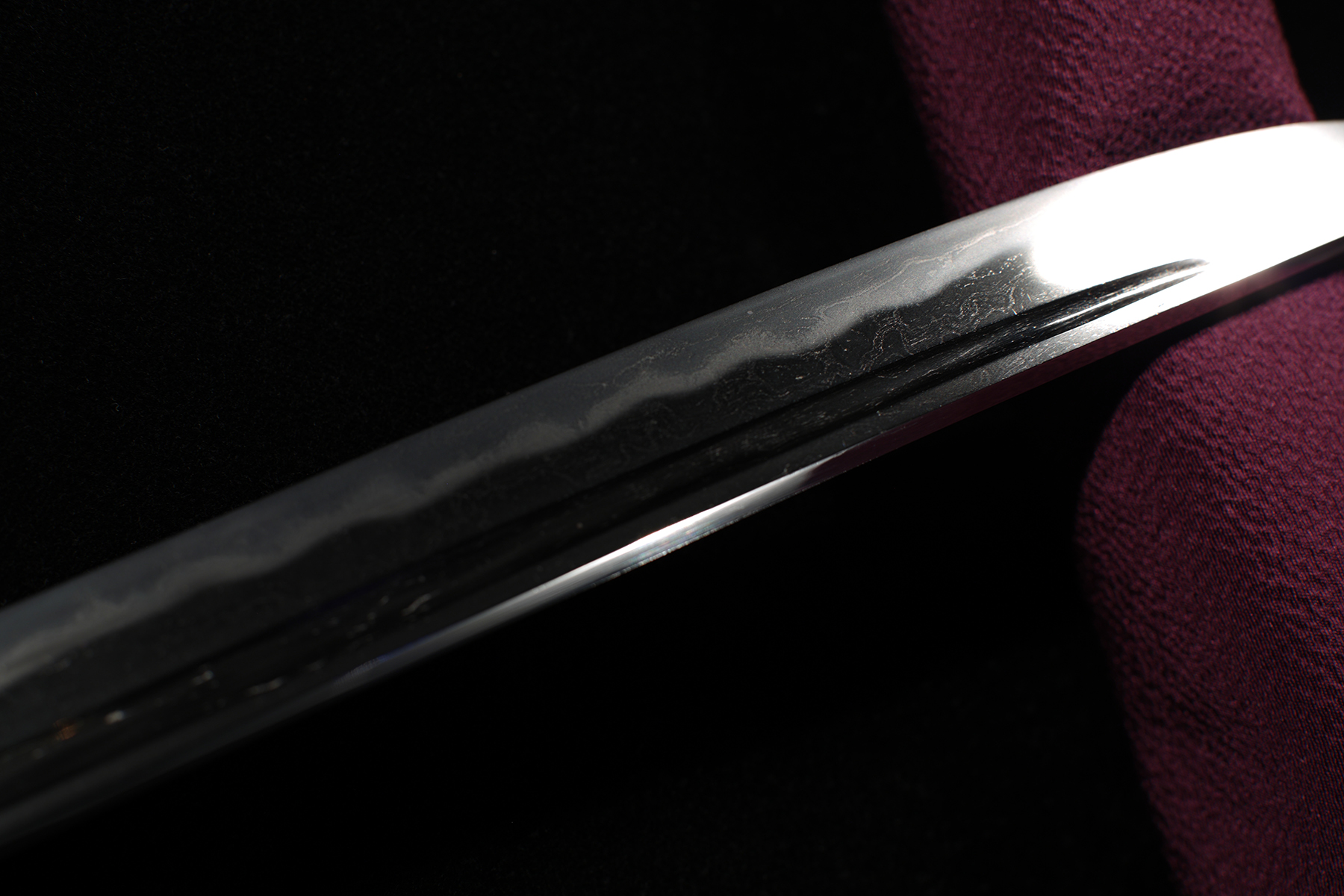
Jigane : The jigane exhibits an itame-hada texture mixed with coarse grain, with ji-nie and chi-kei patterns.
Hamon : The hamon is a wavy blade pattern with footed lines, well-defined nie, and traces of sunagashi and tobi-yaki.
Boushi : The habaki is irregularly shaped with a pointed tip and a deep curve.
[ Highlight ] Hiroga was originally a retainer of Kamo Saemon-no-jo, lord of Kamo in Hōki Province, and was known as Mita Hyōe. After his lord’s family fell into decline, he took the name Saino-o and became a swordsmith, forging blades in Kurayoshi. It is said that he became a disciple of Sōshū Tsunahiro after serving as his guide during a pilgrimage to Kanayako Myōjin in Unshū Hirose, and that he subsequently travelled to Sōshū with Tsunahiro. Thereafter, the Hiroga family branched into the Saino-o lineage and the Mita family, both of which continued into the Edo period, with several generations bearing the same name. This piece is attributed to a Hiroga of the Saino-o line, who created swords during the late Muromachi period, from the Genki to the Tenshō eras. It features a blade shape where the centre of gravity leans towards the back, with a thick layer of grain and a lack of flat areas relative to the width; this appears to have been adjusted by the use of grooves. The influence of late Sōshū can be seen in the jigane with its fine nie, the hamon, and the ‘tanago-hara’ shape, where the blade edge bulges strongly in the middle of the nakago.
[ Conditions ] There is a small scratch on the front, approximately 8.6 cm from the ha-machi. There is slight scuffing at the habaki-moto. Otherwise, it is excellent.