
[ Feature ]
Form : Shinogi-zukuri, with an iori-mune ridge; the blade is slightly thick with a wide body, featuring a high ridge line, a slight difference in thickness between the base and tip, moderate curvature, and a medium cutting edge.
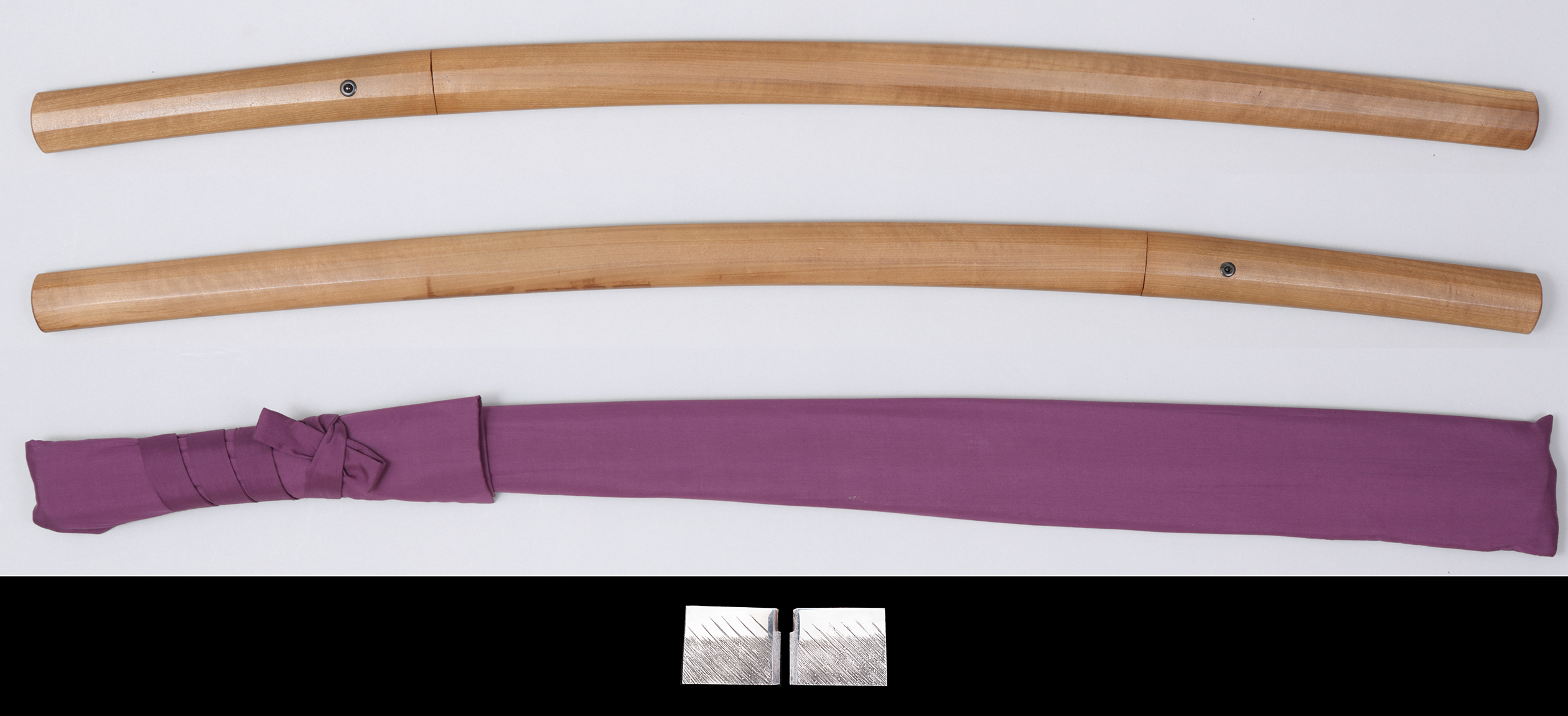
Nakago : The nakago tang is in its original state, with file marks sloping downwards; the tip is chestnut-shaped, and there are two mekugi holes. The hamachi is about one and a half sun set back.
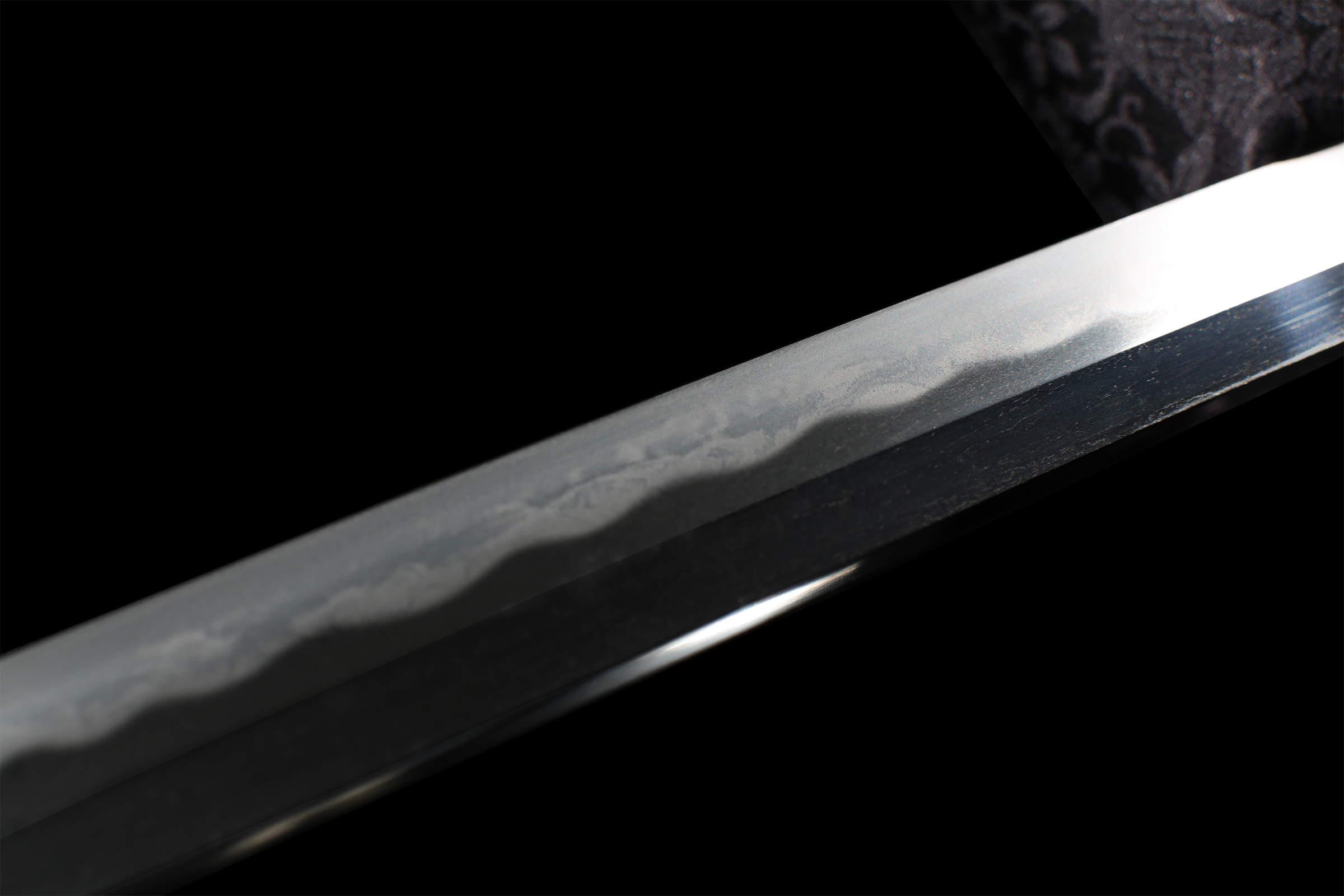
Jigane : The jigane exhibits a well-grained itame-hada texture, mixed with mokume-grain, with ji-nie and fine ground-patterns.
Hamon : The hamon is mixed with chouji and pointed edges; it features small ashi and leaf-like patterns, with nie, and is overlaid with kin-suji and sunagashi patterns.
Boushi : The boshi is irregularly curving, small and round, sweeping towards the tip and curving back slightly.
[ Highlight ] Sukesada of Osafune was a swordsmith from the Sue-Bizen period; in response to the demand for swords during the turbulent Muromachi period, numerous swordsmiths bearing the same name established themselves on the Bizen Osafune base. This piece is a Sukesada dated to the Eiroku era; in later years, the blade was shortened by about one and a half sun and the tang was re-forged to be longer. It is a well-proportioned sword with a pleasing curvature, offering a solid grip. The steel exhibits a well-grained itame-hada texture, interspersed with mokume-grain and flowing grain, featuring ji-nie and fine chi-kei. The hamon consists of a koshi-biraki mutsu-me pattern, interspersed with chōji and pointed edges, with ashi and yo, a strong nioi-nie, and abundant nie, accented by kin-suji and sunagashi, creating a truly impressive work.
[ Conditions ] Excellent.