[ Feature ]
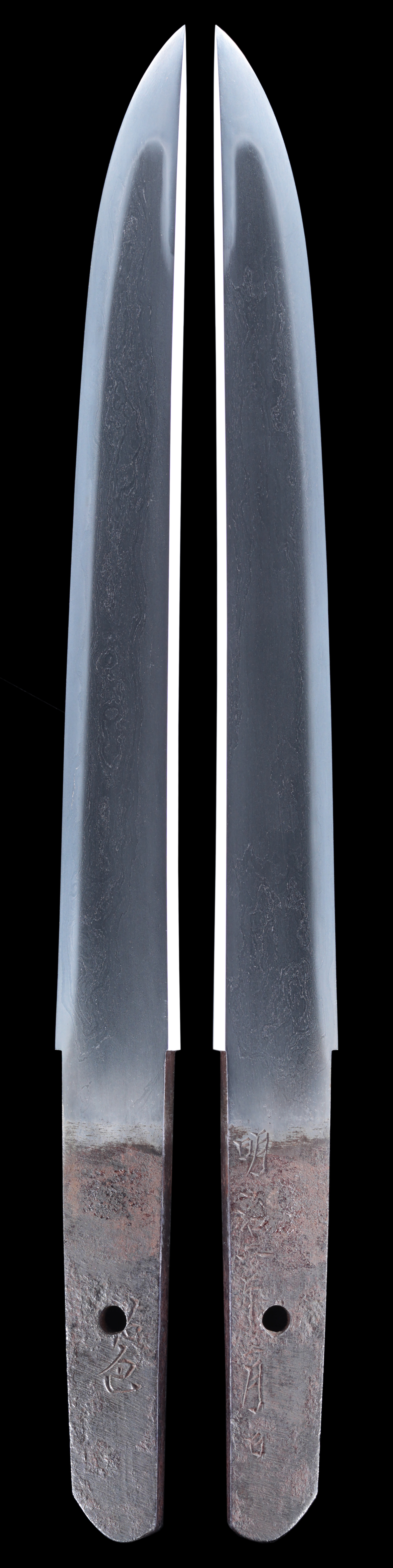
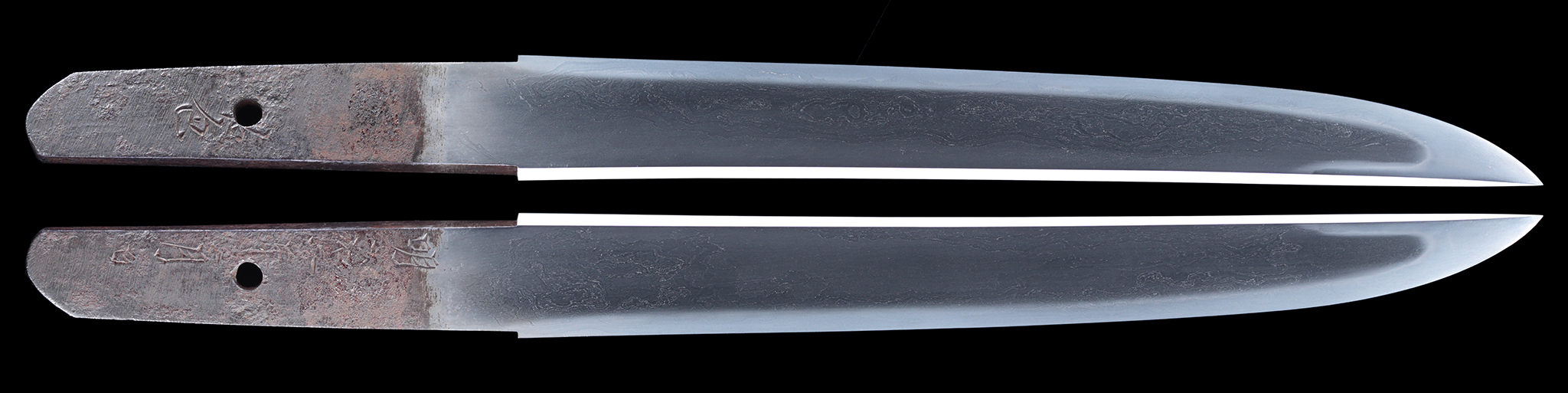
Form : Hirazukuri, three-ridge profile, standard width and thickness, very slight curvature, tapering towards the tip and shortened in length relative to the base width.
Nakago : Raw tang, file marks in a staggered pattern, chestnut-shaped tip, one mekugi hole.
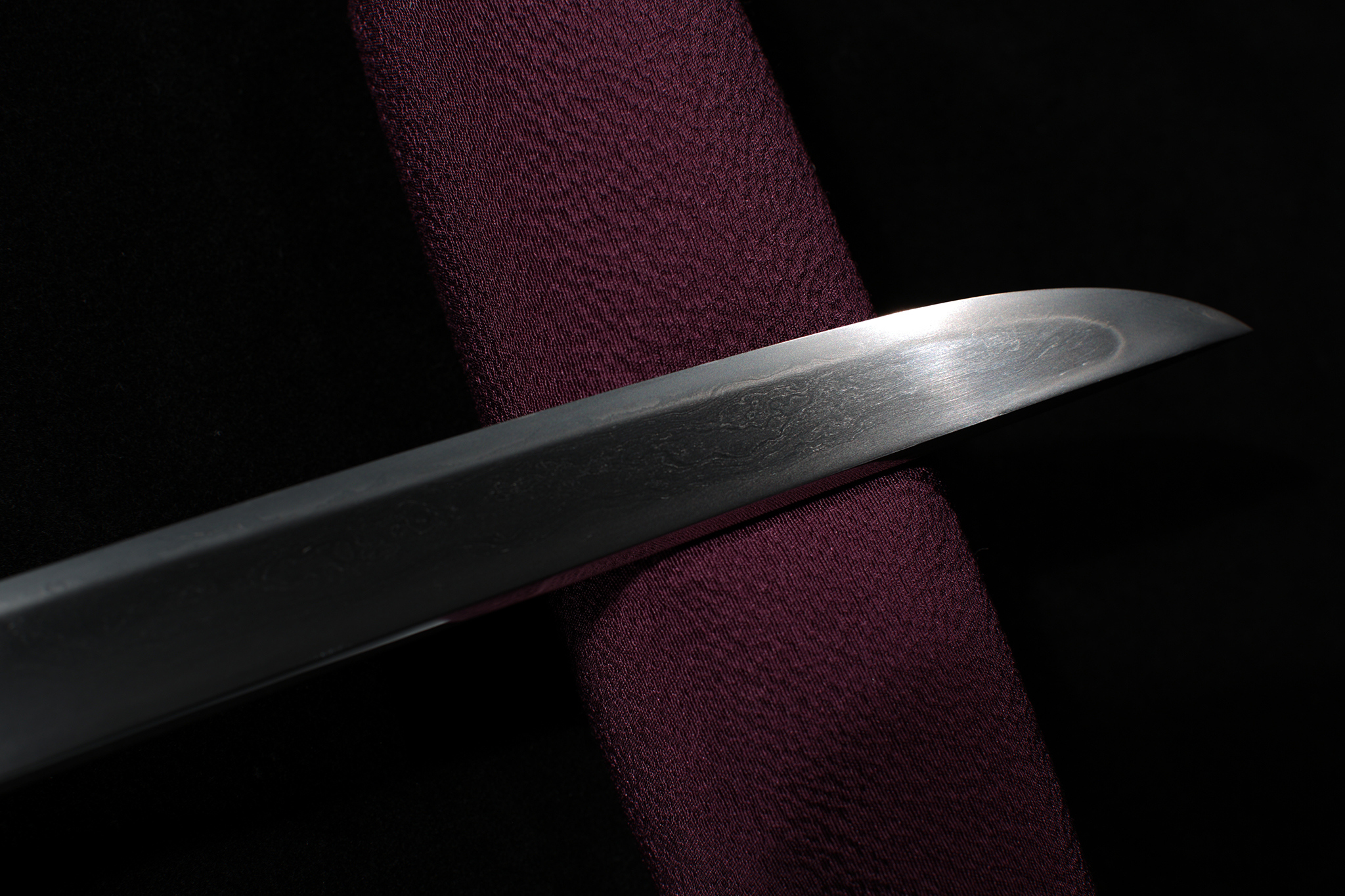
Jigane : The jigane (base metal) features an itame grain pattern intermixed with mokume, with ji-nie (fine surface texture) and jikei (fine surface lines) present.
Hamon : The hamon is a medium straight blade pattern with small chōji, entering the ashi, a tight nioiguchi, small沸 (nie), and streaks of kin-suji and sunagashi.
Boushi : The boshi is a straight small maru, returning long.
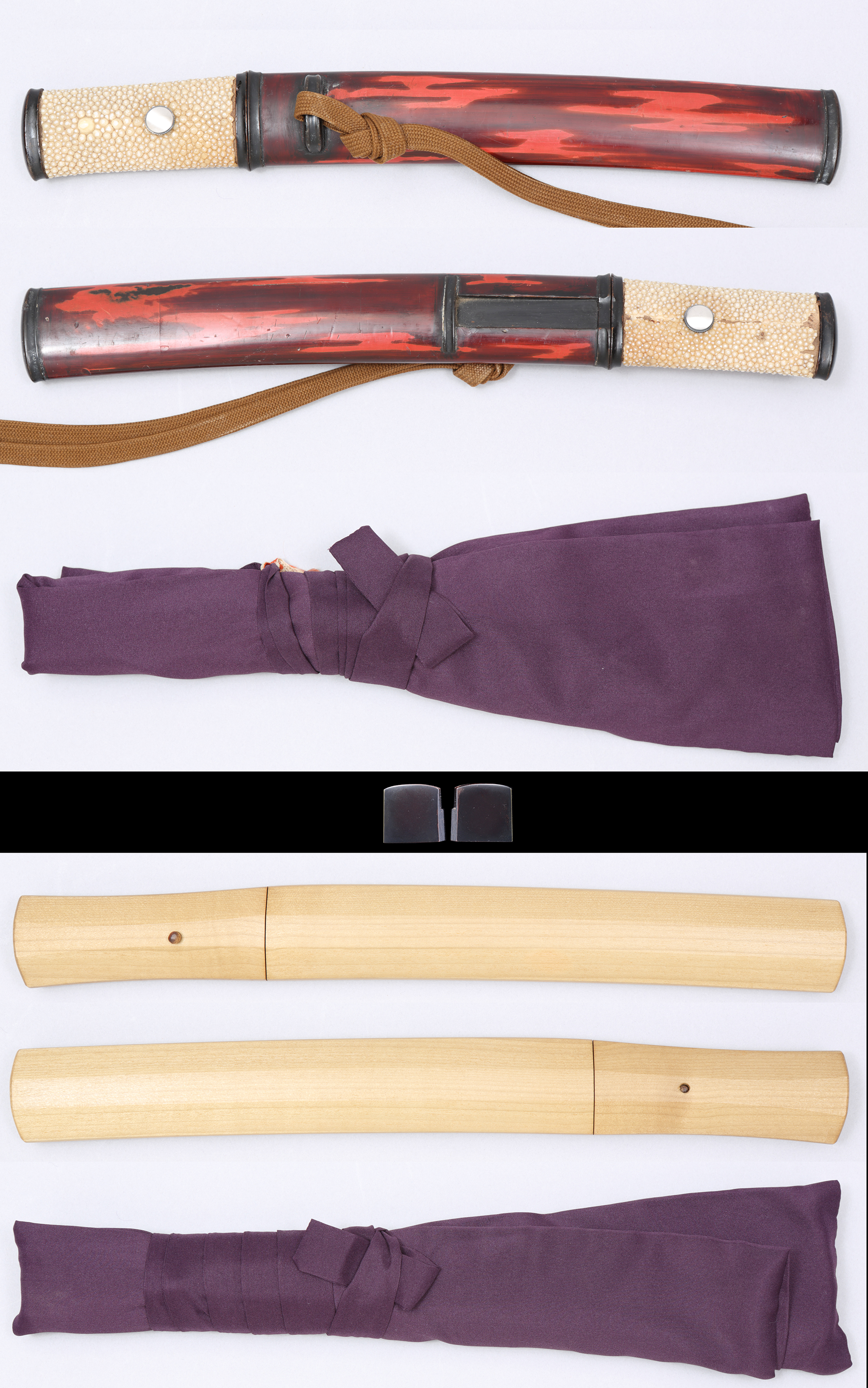
Vermilion lacquered scabbard with dashi-zame tsuka wrapping, aki-kuchi matching sheath
[ Highlight ] The first-generation Yokoyama Yūhō was a Bizen swordsmith, initially named Shunkichi or Shunzaemon. He was the adopted son of Yokoyama Sukenaga (elder brother Sukemori of the first-generation Yūei) and the brother-in-law of the second-generation Yūei. Alongside Yūei and others, he was a master craftsman representing Bizen during the Shin-Shin Tō period. His pride as a successor to the Bizen tradition since Tomonari is evident in signatures such as ‘Tomonari's fifty-eighth-generation descendant’. His signatures include: ‘Forged by Fujiwara no Yūhō, Jūsaemon-no-jō of Osafune, Bizen Province’; ‘Made by Fujiwara no Yūhō, Jūsaemon of the Yokoyama family’; ‘Yokoyama Yūhō of Osafune, Bizen Province’; ‘Yokoyama Yūhō of Osafune, Bizen Province’; ‘Yokoyama Yūhō, the fifty-eighth descendant of Tomonari, of Osafune, Bizen Province’; and ‘Jūsaemon Yūhō of Biyō’. Dated inscriptions include: Tenpō 6 (1835), Kōka 3, 4, 5 (1846-1847), Kaei 1, 2, 3, 4, 5, 6, 7 (1848-1853), Ansei 2, 3, 4, 5, 6, 7 (1855-1860), Man'en 1, 2 (1860-1861), Bunkyū 1, 2, 3, 4 (1861-1863), Genji 1, 2 (1864-1865), Keiō 1, 2, 3, 4 (1865-1868), Meiji 2, 3, 4, 5 (1869-1872). This piece is characterised by its unique, compact form, itame forged blade with mottled itame grain, a straight centre temper line, a well-defined base temper line with fine hamon, and a long, returning boshi.
[ Conditions ] The blade has been polished, and the shira-saya is newly made. There is slight rust on the tang, and the sheath features some partial flaking of the samegawa skin.