
[ Feature ]
Form : The blade features a shinogi-zukuri construction with an iori-mune ridge; the width and thickness are ordinary, with a deep curvature and a pronounced koshi-hi ridge, including a slight tip curve, resulting in a chū-kissaki profile.
The engraving comprises a koshi-hi groove on the front and a goma-bashi pattern on the back, both sides finished in vermilion lacquer.
Nakago : The tang is natural, with file marks sloping downwards on the side; the tip is raised and the butt is chestnut-shaped, with a single mekugi hole.
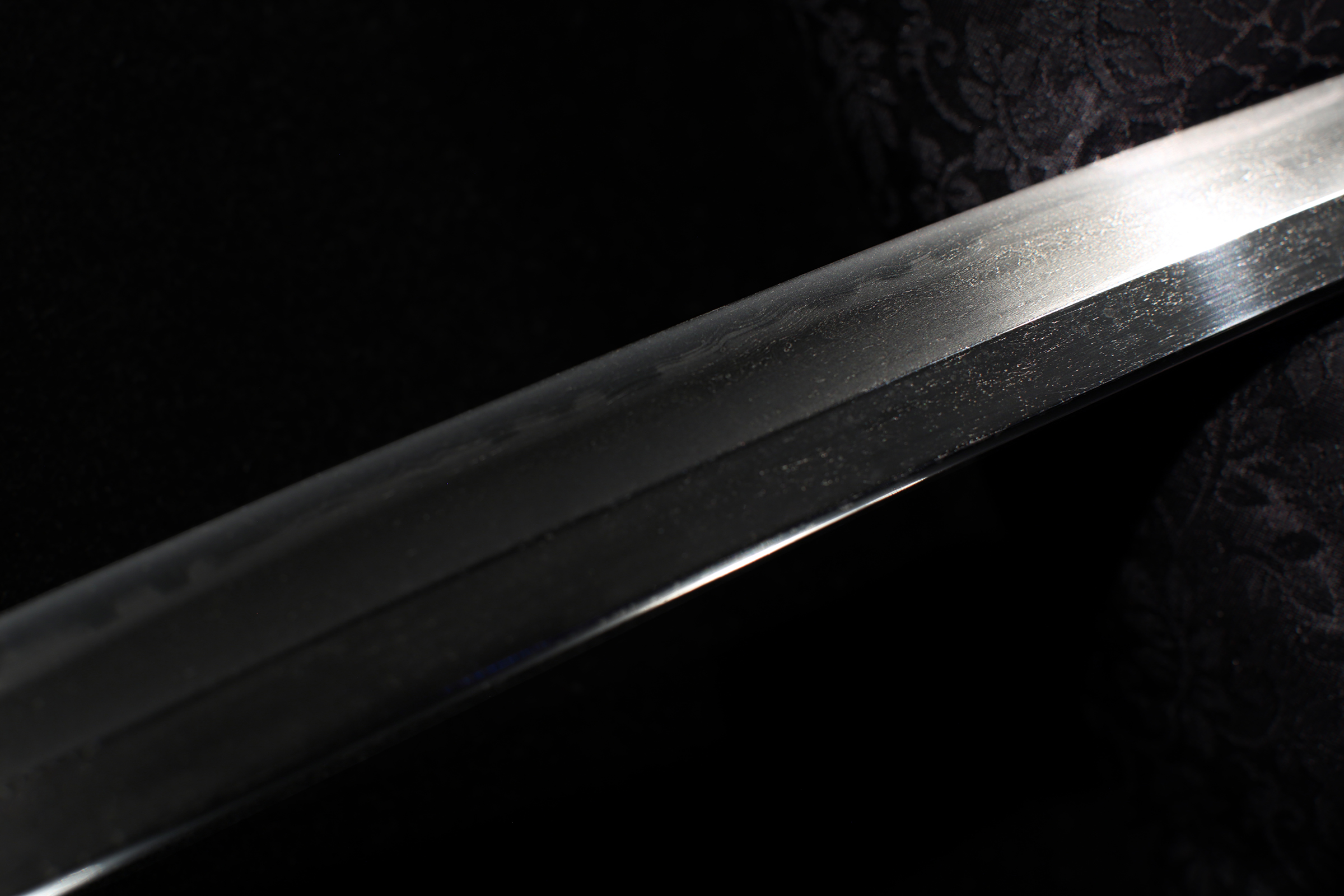
Jigane : The jigane is masa-grained with a touch of itame-hada, showing ground-tempered hamon with a faint, white-tinged reflection.
Hamon : The hamon is of a straight-edged style, mixed with small ko-gunome patterns, featuring small feet and leaf-like patterns; the temper is well-defined, with a frayed edge and frequent sunagashi patterns.
Boushi : The tip curves back into a small round shape and sweeps outwards at the point.
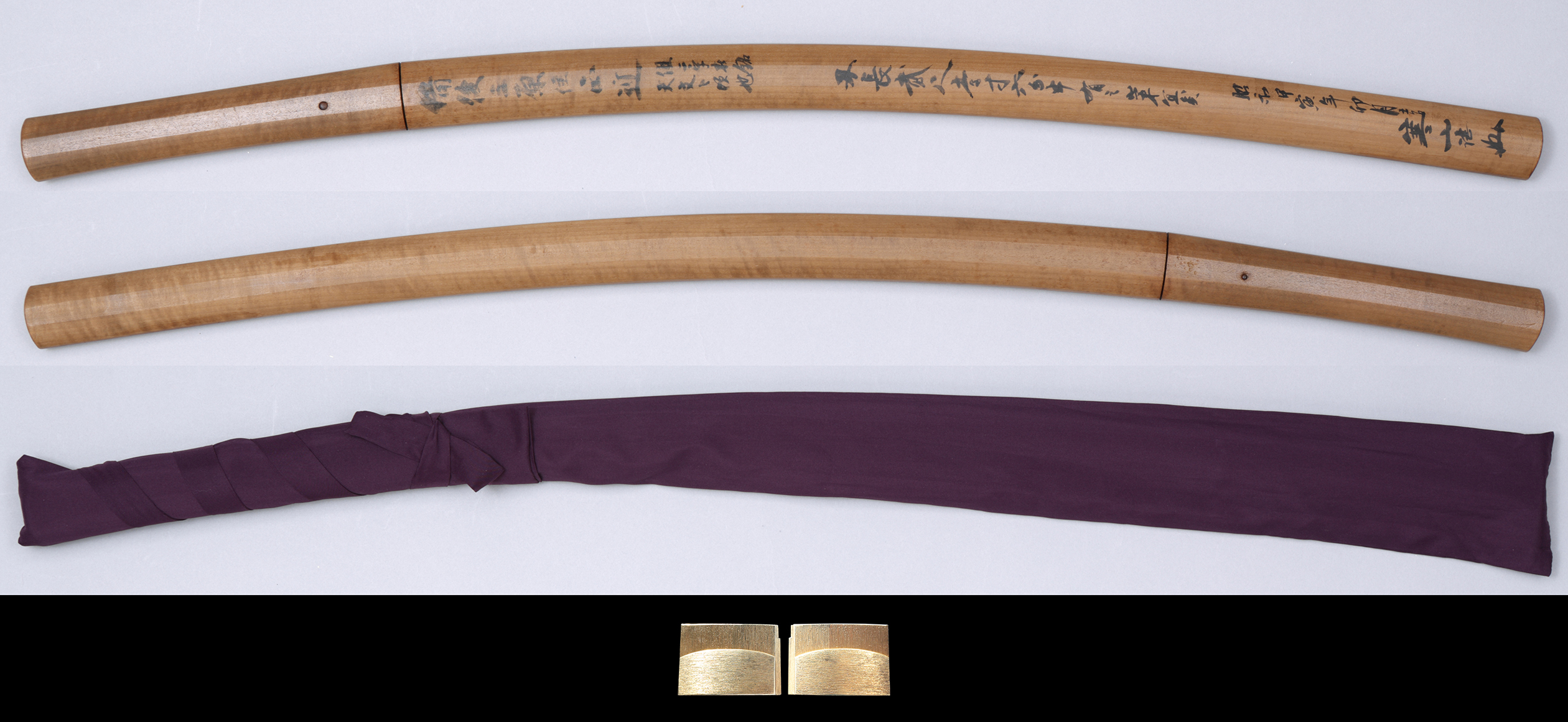
Saya-gaki inscription :
"備後三原住正近 但二字在銘 天文之頃也 刃長貳尺一寸六分半有之 出来宜矣 昭和甲寅年 卯月吉日 寒山誌 (花押)"
Made by Masachika of Mihara in Bingo; the inscription bears the characters ‘Dan’; dating from the Tenmon era. The blade measures two shaku, one sun and six bu and a half. It is fit for use. On an auspicious day in the second month of the Year of the Tiger, Shōwa era. By Kanzan (seal)
[ Highlight ] Masachika, also known as Kuroda Sukeroku, was a swordsmith of the Bingo-Kai-Mihara school who created swords around the Tenmon era. He inscribed his swords with signatures such as ‘Created by Kai Masachika, resident of Mihara, Bishu’, ‘Created by Masachika, resident of Mihara, Bishu’, ‘Kai Masachika, resident of Mihara, Bingo Province’, and ‘Created by Masachika, resident of Mihara, Bingo Province’. His dated works include those from the 2nd, 3rd, 5th, 6th, 7th, 12th and 20th years of the Tenmon era. This piece features a high shinogi line and a deep curvature that extends to the tips; it is rare for a sword to have grooves carved into the shinogi ground and finished with red lacquer. It is a fine example with a well-defined ji-nie pattern.
[ Conditions ] It has been polished with old polishing to reveal its original finish, and shows slight signs of rust and flaws.