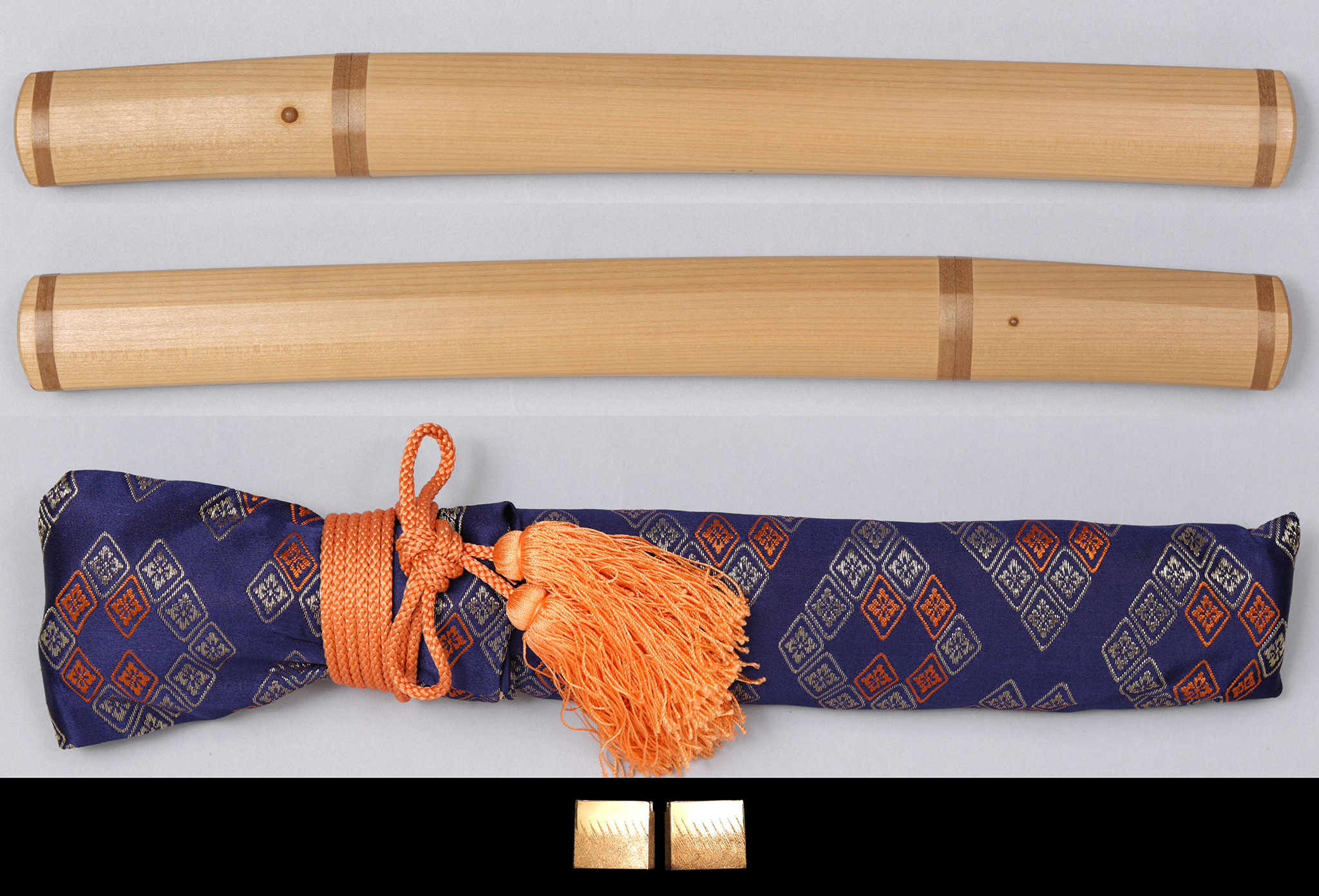
[ Feature ]
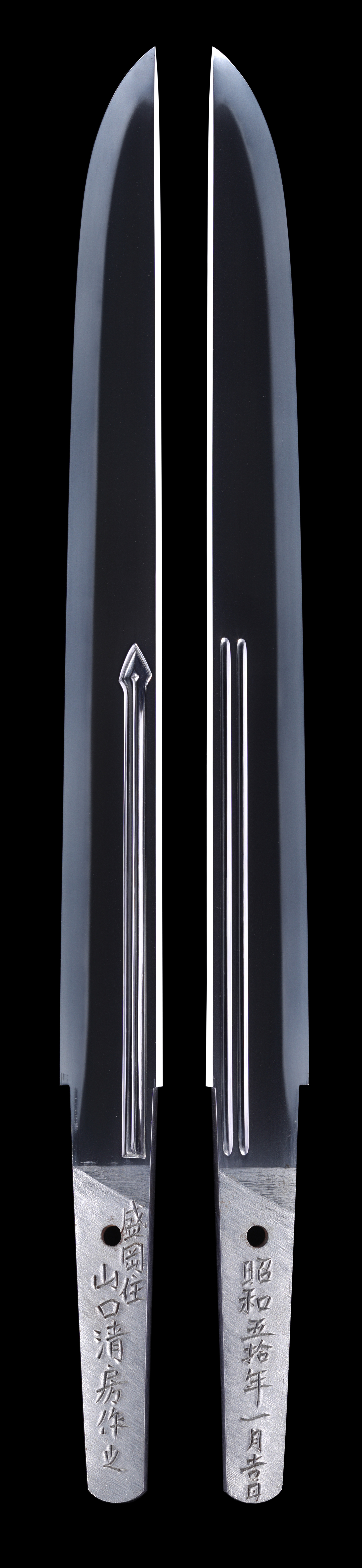
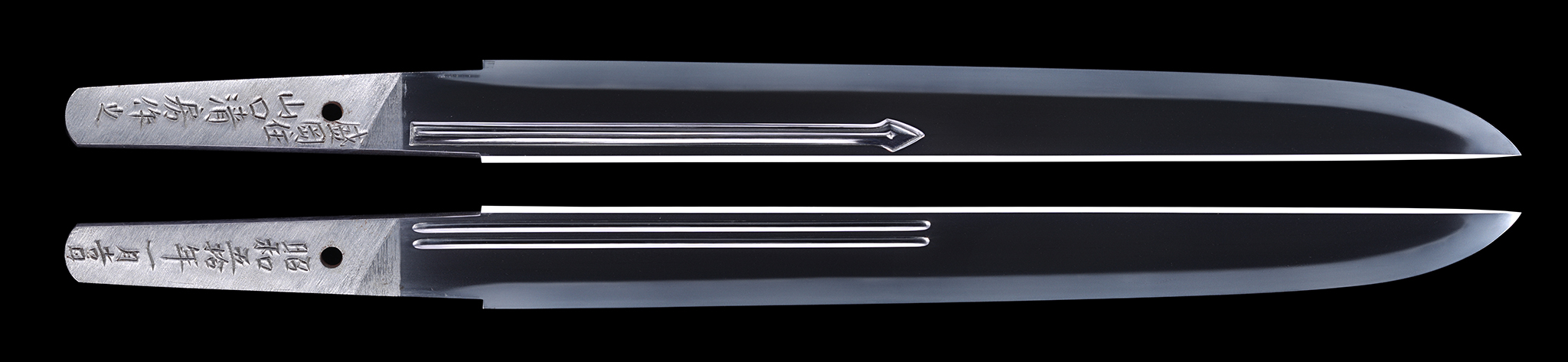
Form : Hirazukuri, iori-mune, standard width and thickness, no curvature, a slightly flared tanto form.
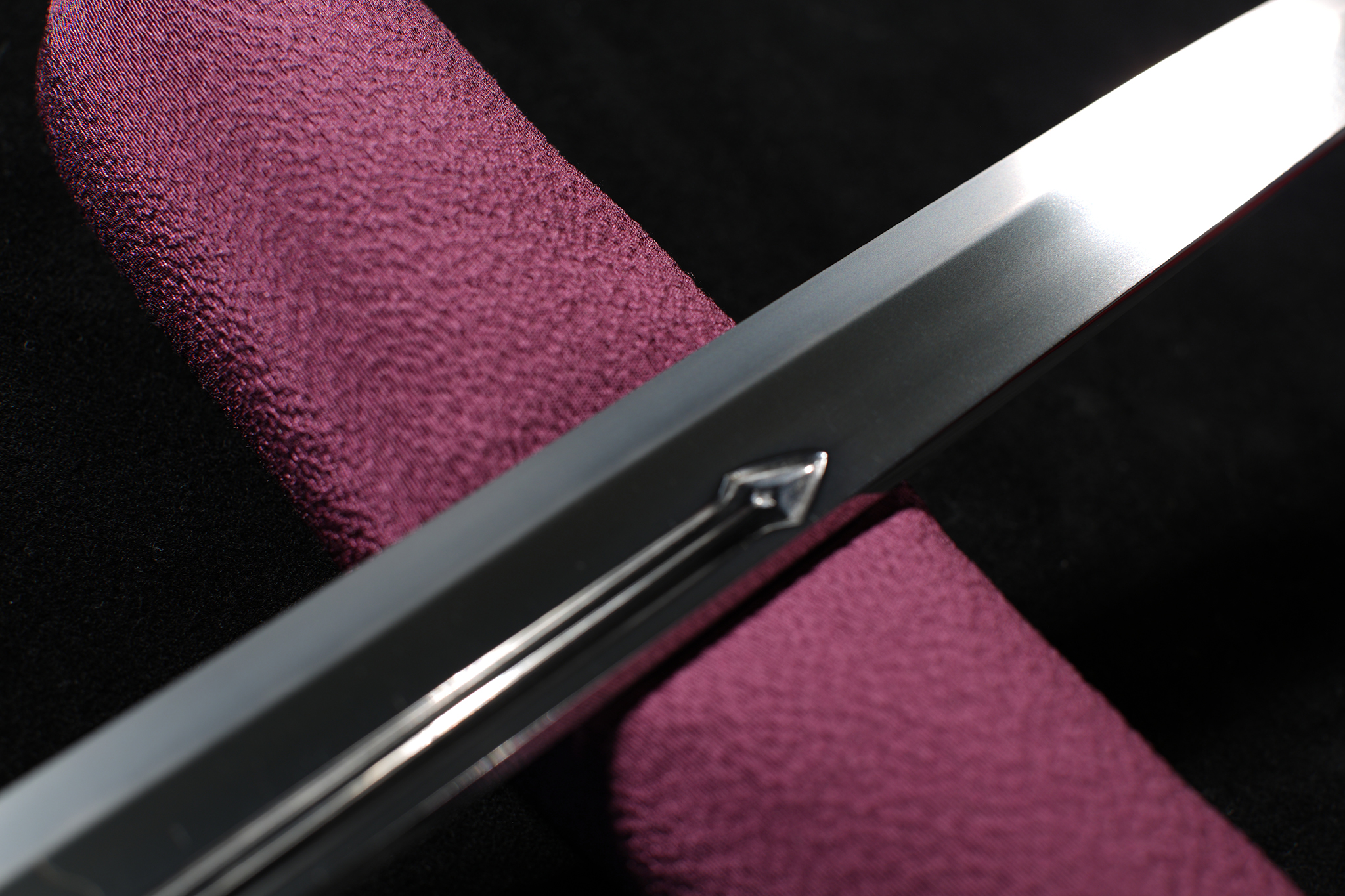
Engraving:素剣 (suken) on the front,護摩箸 (goma-bashi) on the back.
Nakago : Ubu raw stem, file marks in a diagonal pattern with decorative filing, tip with a chestnut-shaped end, one mekugi hole.
Jigane : Small itame-hada texture, ji-nie (ground-boil) forming in fine particles.
Hamon : The hamon is a straight blade pattern, interspersed with small ko-gunome, featuring fine neki and small ashi.
Boushi : The bōshi is straight with a small maru, returning shallowly.
[ Highlight ] Master swordsmith Yamaguchi Kiyofusa, whose given name is Yamaguchi Takeshi, is a swordsmith from Morioka City, Iwate Prefecture, born in 1932 (Showa 7). He began as a cutlery swordsmith, inheriting his father Kiyofusa's family trade, before studying under Sumitani Masamine. In 1969 (Showa 44), he received official approval from the Agency for Cultural Affairs to create swords. He adopted the name Kiyofusa, inherited from his father, as his swordsmith name. After establishing his own workshop, he garnered multiple awards at the New Master Swords Exhibition. He was recognised as a master swordsmith without examination in 1986 (Showa 61) and designated an Intangible Cultural Property of Iwate Prefecture in 1993 (Heisei 5). Dedicated to researching the recreation of the Kamakura Ichimonji style, his work is noted for the profound beauty of its jigane (ground metal). This piece, crafted when Master Kiyofusa was 43 years old, is a short sword (tanto) that also showcases intricate engraving.
[ Conditions ] Excellnet.