  |
Naginata, Shirasaya |
Hosokawa Masayoshi
|
[ Signature ] omote : - ura : engraved seal |
[ Size ]Blade length: 56.66 cm (1 shaku 8 sun 7 bu 0 rin), Curvature: 1.21 cm (4 bu 0 rin), Base width: 3.12 cm, Base thickness: 0.73 cm, Base thickness of the ridge: 0.84 cm, Two mekugi holes, Blade weight: 916 g, Total length of shira-saya: 125 cm |
[ Period ] Edo, second half of. |
[ Province ] Musashi |
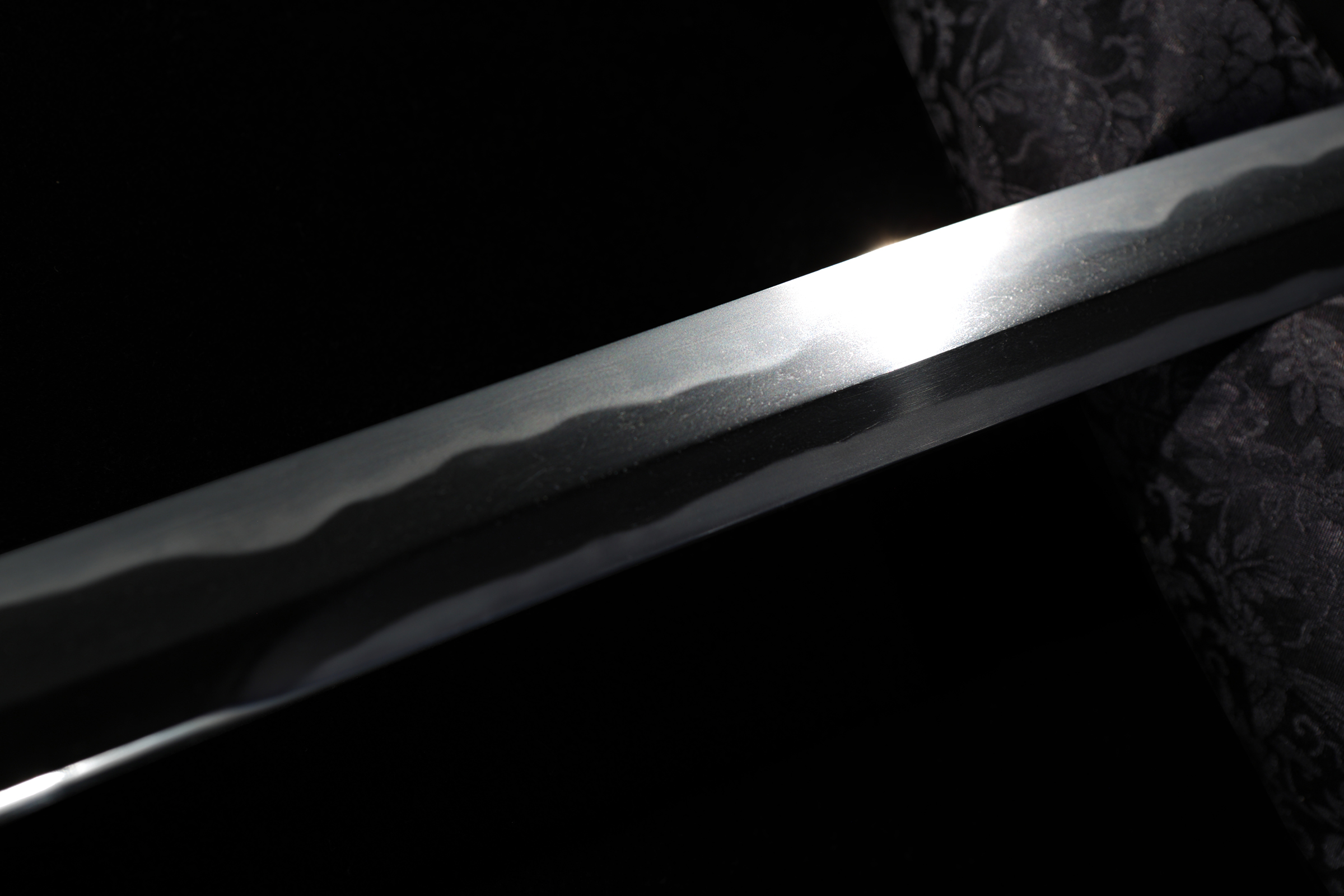 |
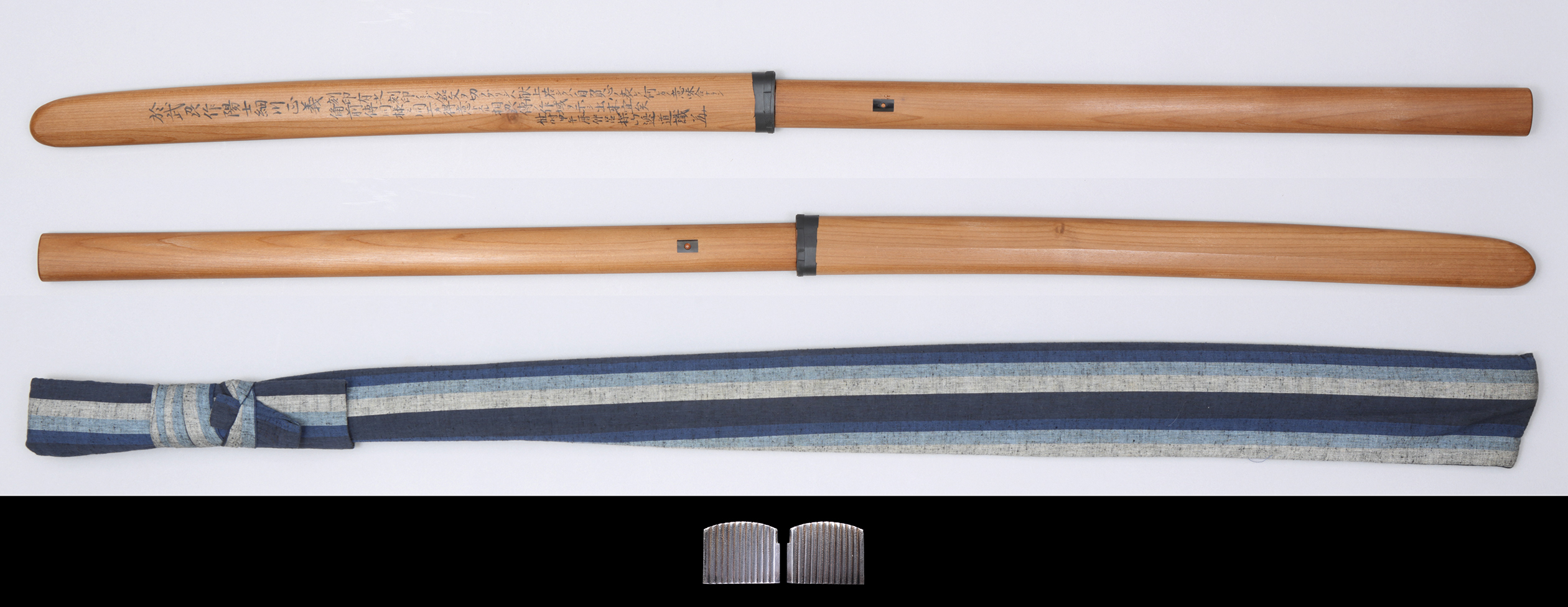
[ Feature ] 鞘書 : 於武州作陽士正義 刻印有之 刻印ノミデ銘文ヲ切ラザリシハ献上若シクハ自負心ノ表レノ何レカノ意味合ナラン備前伝同様二同工ガ得意トスル相州伝ノ作域ヲ示し出来宜矣 [ Highlight ] Masayoshi Hosokawa (the second generation) was the son of Masayoshi, the first-generation swordsmith of Kanuma in Yashu. Known as Shuzeinosuke, he moved to Edo and became a disciple of Suishin-shi Masahide. His earliest signature was ‘Masakata’, later changing to ‘Morihide’; he was the de facto successor who created swords according to his master’s theories, and is known, alongside Taikei Naotane, as one of the two pillars of the school. He became a court smith for the Matsudaira family, lords of the Tsuyama Domain in Bizen Province, and spent much of his life in Edo, specialising in the Sōshū and Bizen traditions. He passed away on 6 June 1858, aged 73. This piece is a short sword that exemplifies Masayoshi’s Sōshū-style craftsmanship applied to a naginata, characterised by its restrained curvature. [ Conditions ] There are some tiny, dot-like indentations on the base of the collar and approximately 5 cm below the tip on the ridge side, but otherwise it is in excellent condition. |
[ Attachments ] Habaki(suaka-ji, silver foiled, single), shirasaya, bag of shirasaya and NBTHK Tokubetsu hozon paper特別保存刀剣鑑定書(issued on 13th August Heisei 24(2012)) |
 |
[ Item number ] A090526 [ Price ] JPY 1,250,000- (shipping and insurance fee are not included in the price) |
Please order by E-mail.

About TOUKEN KOMACHI
BACK
TEL +81-(0)3-5284-9014/ FAX +81-(0)3-5284-9043____E-mail : s_tsukada@toukenkomachi.com
Copyright © 2009- Touken komachi All rights reserved. |